Console and portable digital pianos can share an 88-key range while asking very different things of a room. The first decision is the physical arrangement: a dedicated cabinet or furniture frame, or a keyboard intended for a separate support. A portable instrument sold with a furniture stand complicates the labels further. Compare the actual package rather than treating the category as a promise of weight, portability or included equipment. This guide focuses on space, assembly, pedals and the practical consequences of moving the instrument.
Define the package you are comparing
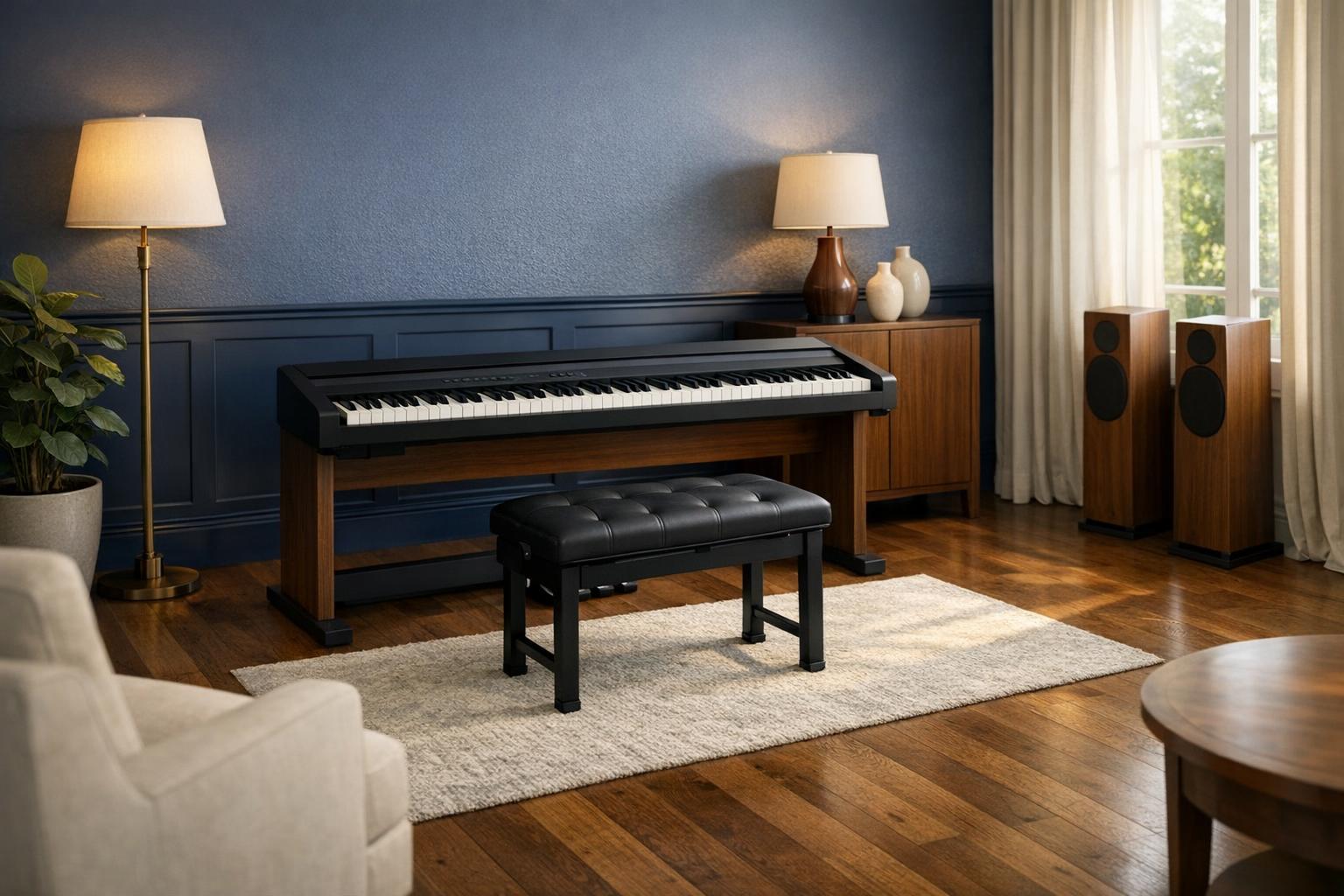
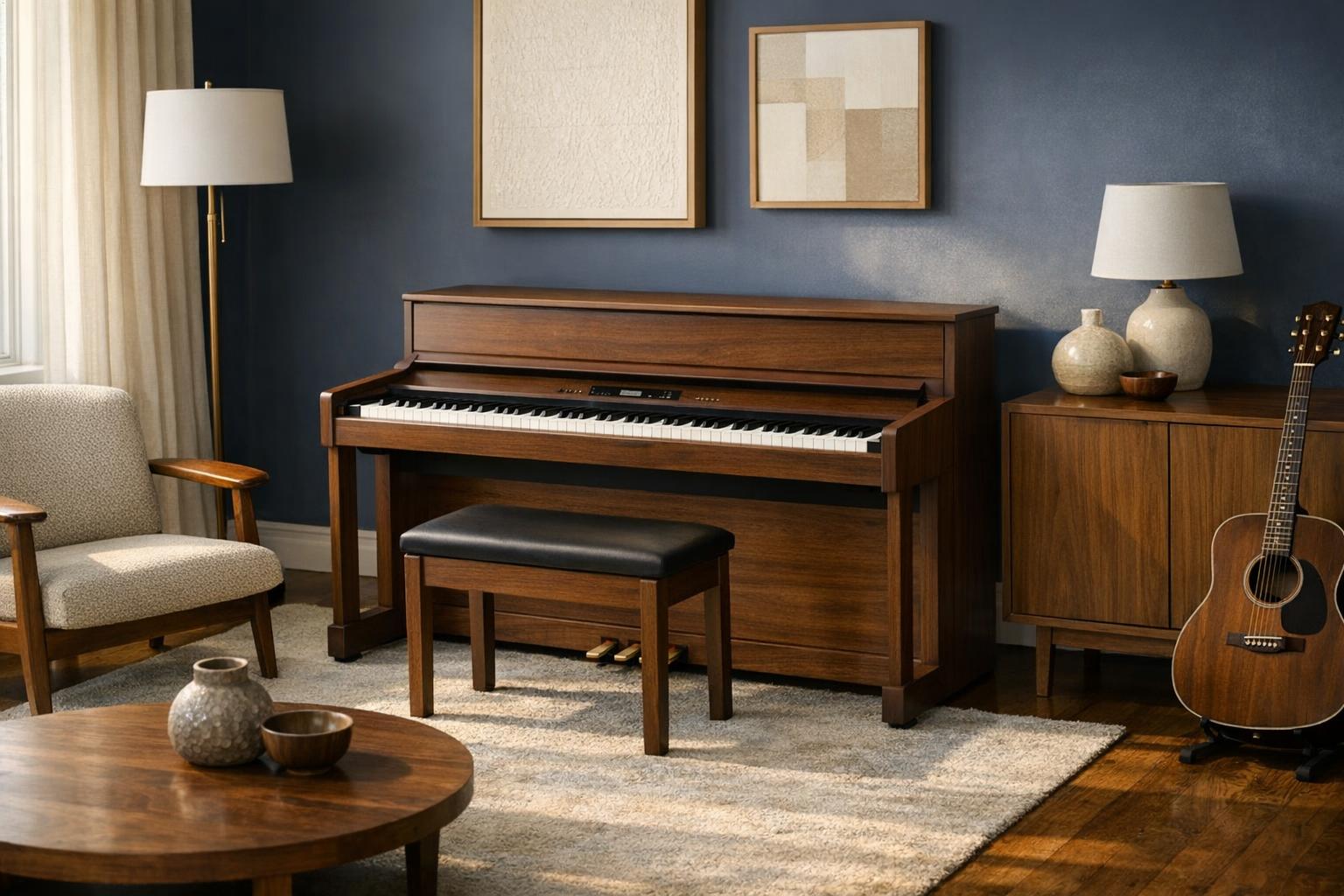
A console-style setup usually creates a dedicated furniture arrangement around the instrument and its pedals. A portable-format keyboard can also be sold in a package with a furniture stand, making the assembled arrangement more important than the word portable in the title. Our console comparison includes complete console arrangements and clearly documented furniture-stand bundles; it does not rank stand-only listings as pianos. Read the exact included-items statement before comparing two offers.
Keep the keyboard identity separate from the bundle identity. The same instrument might appear with a basic support, a furniture frame, a bench or a multi-pedal unit. The price of the complete package and its compatibility requirements can differ substantially. Do not transfer the review count, included accessories or dimensions from one ASIN to another. A shared model family is useful for avoiding duplicate shortlist positions, but each listing still needs its own source record and captured review evidence.
For the next part of this decision, read Digital Piano Pedals: Compatibility Before Features. Keep the equipment requirement separate from personal preference, and verify the exact selected model before treating related information as evidence for your own configuration.
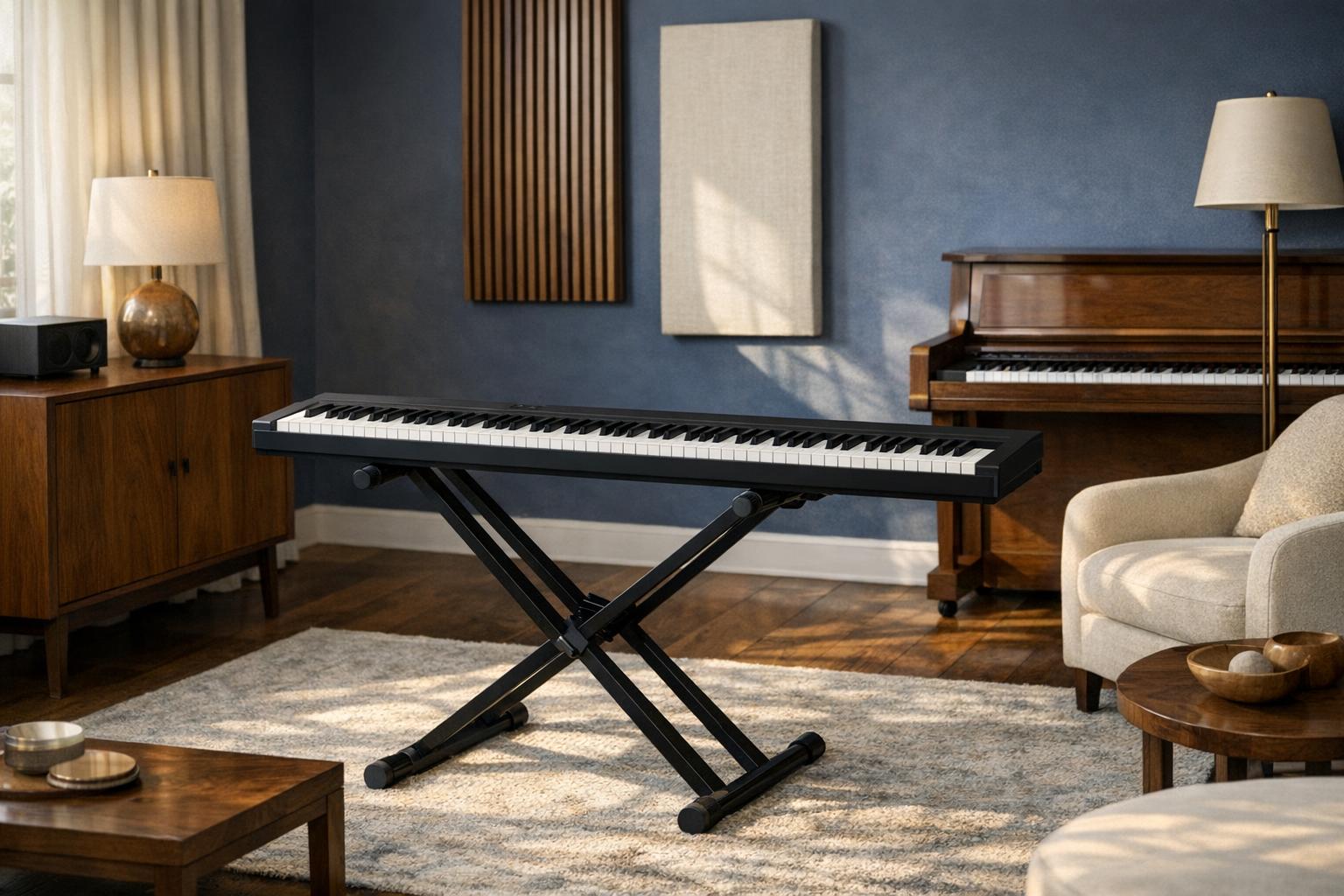
Measure the permanent footprint
The keyboard width is only the starting measurement. Record the assembled depth, any projection of the music rest, pedal position and the space used when the bench is occupied or moved away. Leave walking routes and door movement outside that planning rectangle. There is no universal bench allowance that makes every setup comfortable, so our room planner asks you to supply your own allowance instead of claiming a standard ergonomic clearance.
Delivery needs its own measurements. Check the carton sizes and the narrowest turn between the entrance and the final room. Ask whether the delivery service includes only drop-off or any additional handling; do not assume assembly or placement from a furniture photograph. If the instrument is upstairs, establish the handling plan before ordering. The assembled product dimensions are not a substitute for carton dimensions, and a console that fits its destination may still be difficult to bring through the access route.
For the next part of this decision, read Planning Room Space and a Bench for a Digital Piano. Keep the equipment requirement separate from personal preference, and verify the exact selected model before treating related information as evidence for your own configuration.
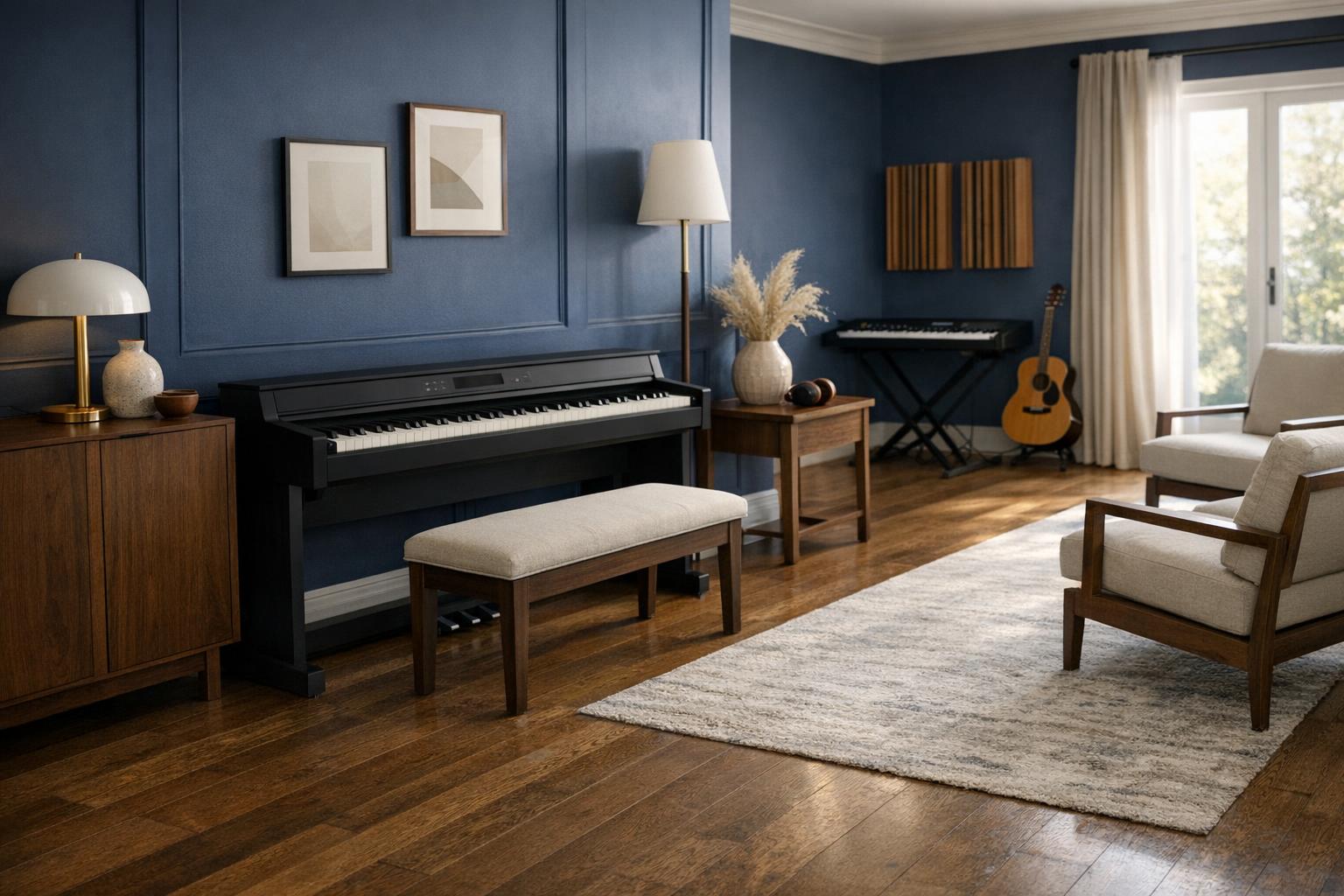
Account for stand and pedal behavior
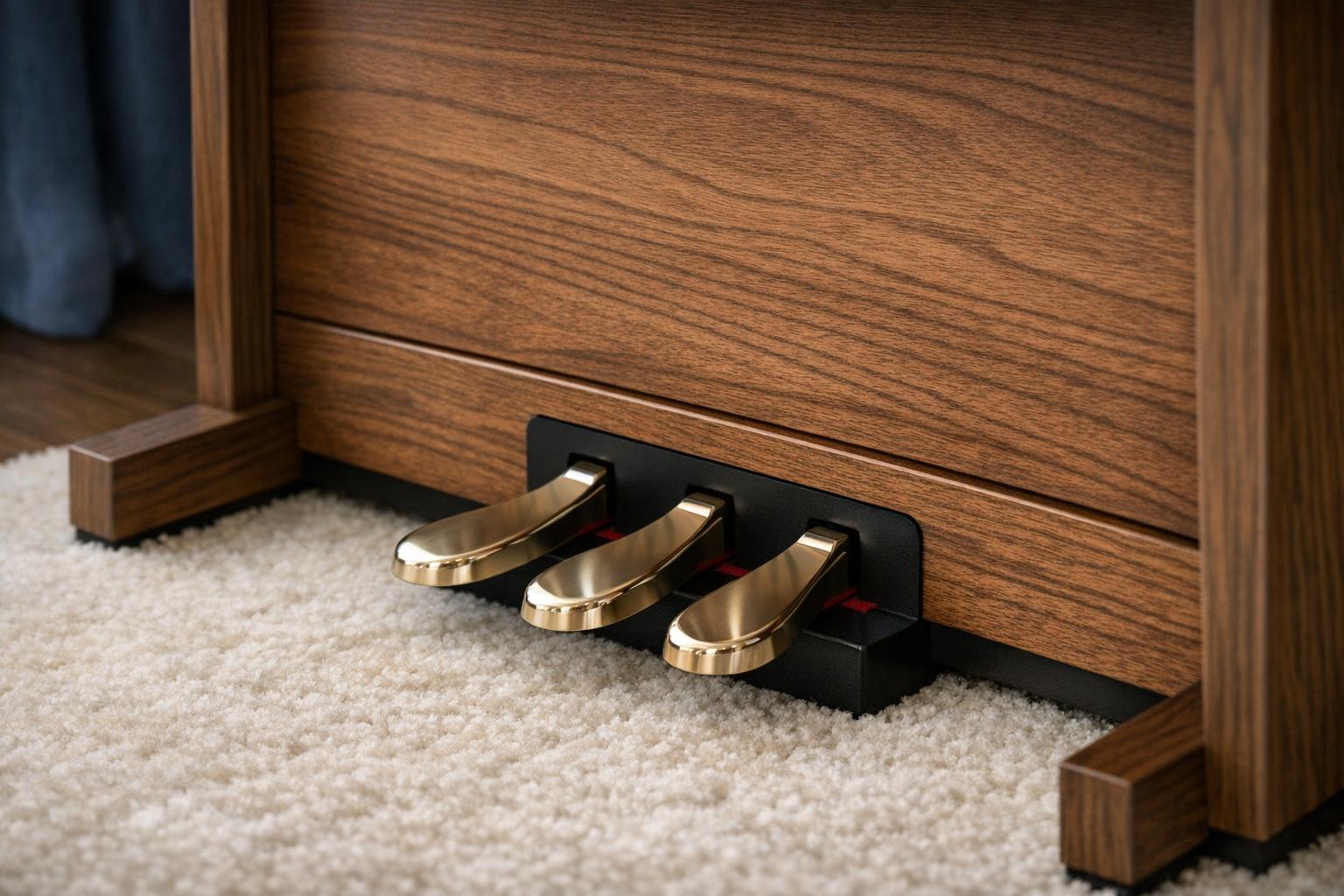
A separate stand should support the exact keyboard dimensions and weight using the manufacturer's guidance. Confirm how the keyboard is retained and whether an approved attachment is required. A furniture pedal unit may depend on a matching stand, proprietary connector or model-specific support. A generic pedal that fits the socket physically is not automatically equivalent to the intended pedal assembly. Check function and compatibility, not appearance alone.
For a movable setup, consider the whole sequence: disconnecting the approved cables, removing accessories, moving the keyboard safely, setting the support again and placing the pedal. We do not give model-specific lifting or assembly instructions; follow the manual and obtain appropriate help. Repeated movement is a different requirement from an occasional room rearrangement. Carrying weight, case size and setup steps deserve more attention when the instrument will travel regularly than when it stays on the same stand all year.
For the next part of this decision, read Polyphony and Piano Sounds: Reading Specifications. Keep the equipment requirement separate from personal preference, and verify the exact selected model before treating related information as evidence for your own configuration.
Choose for the actual room and routine
A dedicated console can be a sensible arrangement when the music space is permanent and the included furniture fits the room. A portable-format instrument can suit a shared room or a changing setup, but that advantage disappears if the complete stand-and-bench arrangement cannot be stored conveniently. Evaluate where each part goes, not only where the keyboard goes. Storage should follow the manufacturer's conditions and should not leave the instrument precariously supported.
Finally, compare the musical features independently of the format. Console does not prove a superior action, and portable does not establish built-in speakers or a particular connection set. Read the key action, headphone and pedal documentation for each exact model. Use the category shortlist to narrow the physical arrangement, then resolve the remaining feature questions. Neither format guarantees a particular sound preference, learning outcome or long-term satisfaction; those claims would go beyond the documentation this site collects.
Sources and further reading
- Casio Privia PX-770 – 88-Key Weighted Console Digital Piano | Tri-Sensor II Scaled Hammer Action Keys | AiR Sound Source, 19 Tones, Concert Play, 16W Stereo Speakers, USB-MIDI | Elegant Black Cabinet — exact equipment listing
- Yamaha manual library: choose the exact model; do not substitute series specifications
- Yamaha portable piano range: separate action, USB audio/MIDI and polyphony fields