Pedals are easy to overlook because a small accessory can look interchangeable across many instruments. In practice, a sustain switch, a continuous pedal and a furniture-mounted multi-pedal unit may use different connections and support different functions. The correct choice starts with the exact piano model and its manual, not with the accessory's appearance. This guide explains the questions to resolve before buying a replacement or upgrading a bundle. It does not assume that a plug fitting a socket proves electrical or functional compatibility.
Identify what the listing includes
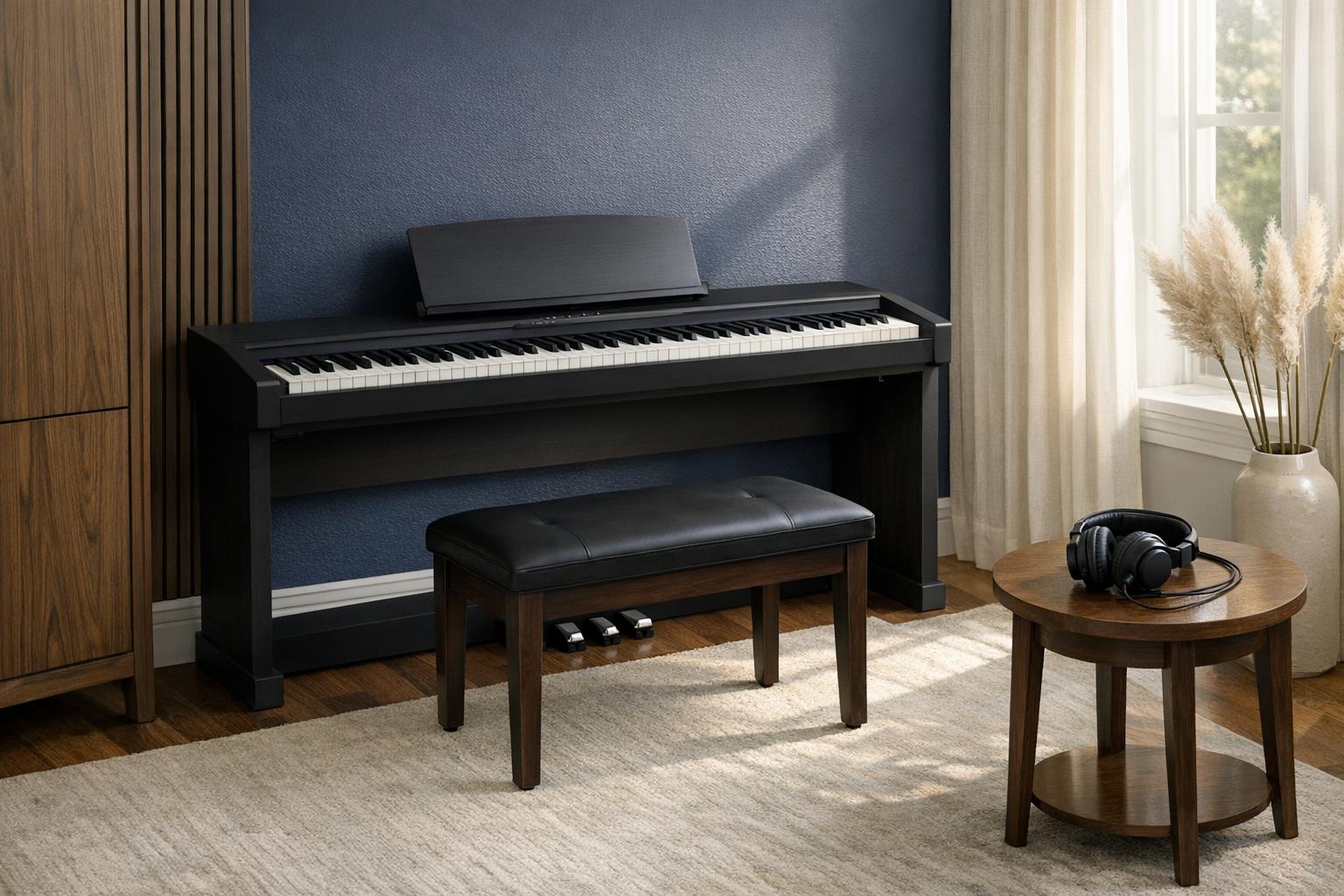
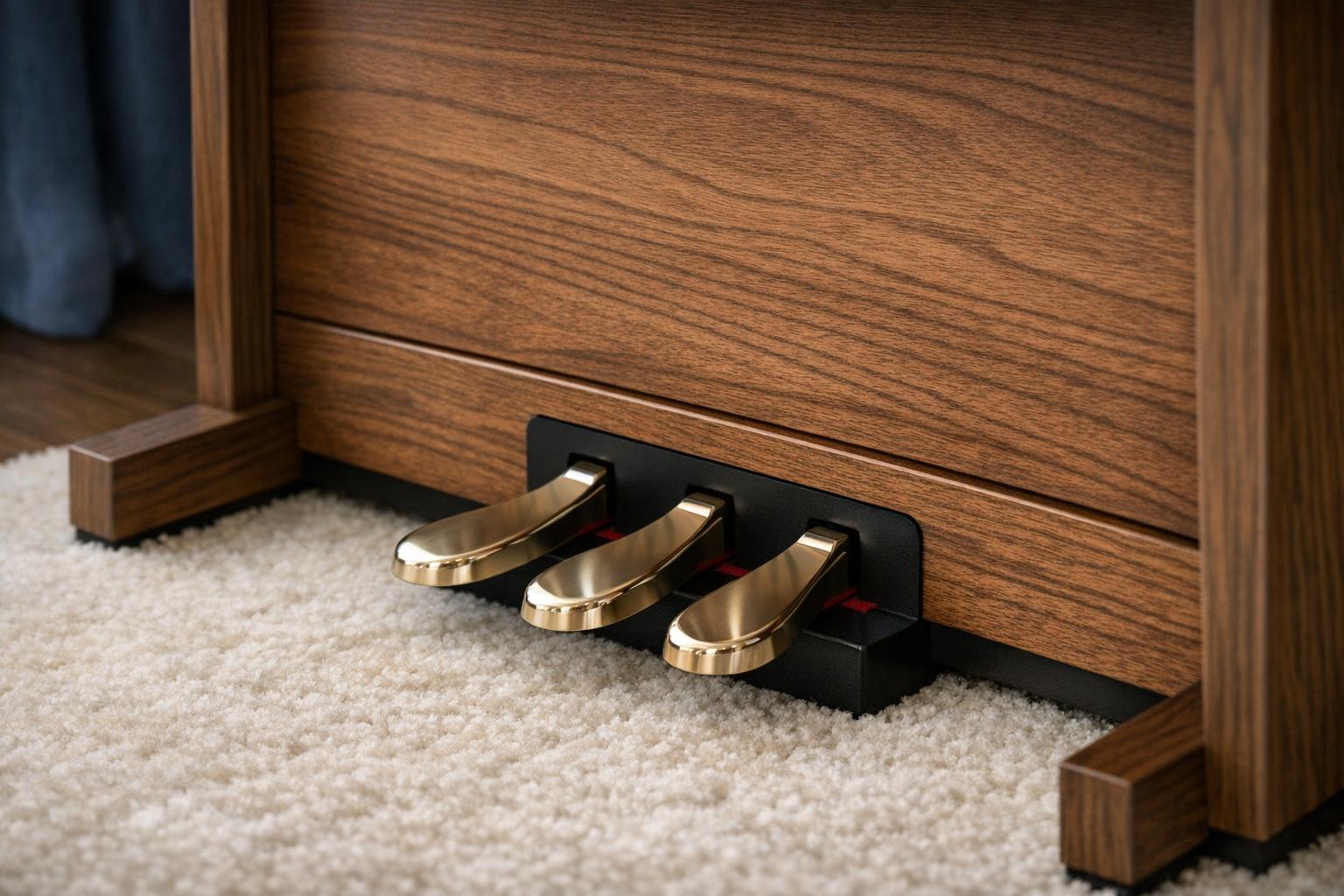
Read whether the package includes a sustain switch, a sustain pedal, a three-pedal unit or no pedal at all. Those phrases should be retained as written until the manual clarifies the behavior. A basic included switch may serve a different purpose from an optional continuous pedal, and a furniture assembly may require a compatible stand. The image of three pedals beneath a staged keyboard is not sufficient evidence that they come in the box.
Record the pedal part number when the manufacturer supplies one. Also record the exact keyboard model suffix, because a series name may cover instruments with different accessory support. For a retailer bundle, distinguish the manufacturer's included equipment from accessories added by the seller. A third-party bundle can be useful, but its description should explicitly identify the contents. If the wording is ambiguous, ask the seller to confirm the specific pedal and its supported functions before you place the order.
For the next part of this decision, read Digital Piano Headphones and Quiet-Use Planning. Keep the equipment requirement separate from personal preference, and verify the exact selected model before treating related information as evidence for your own configuration.
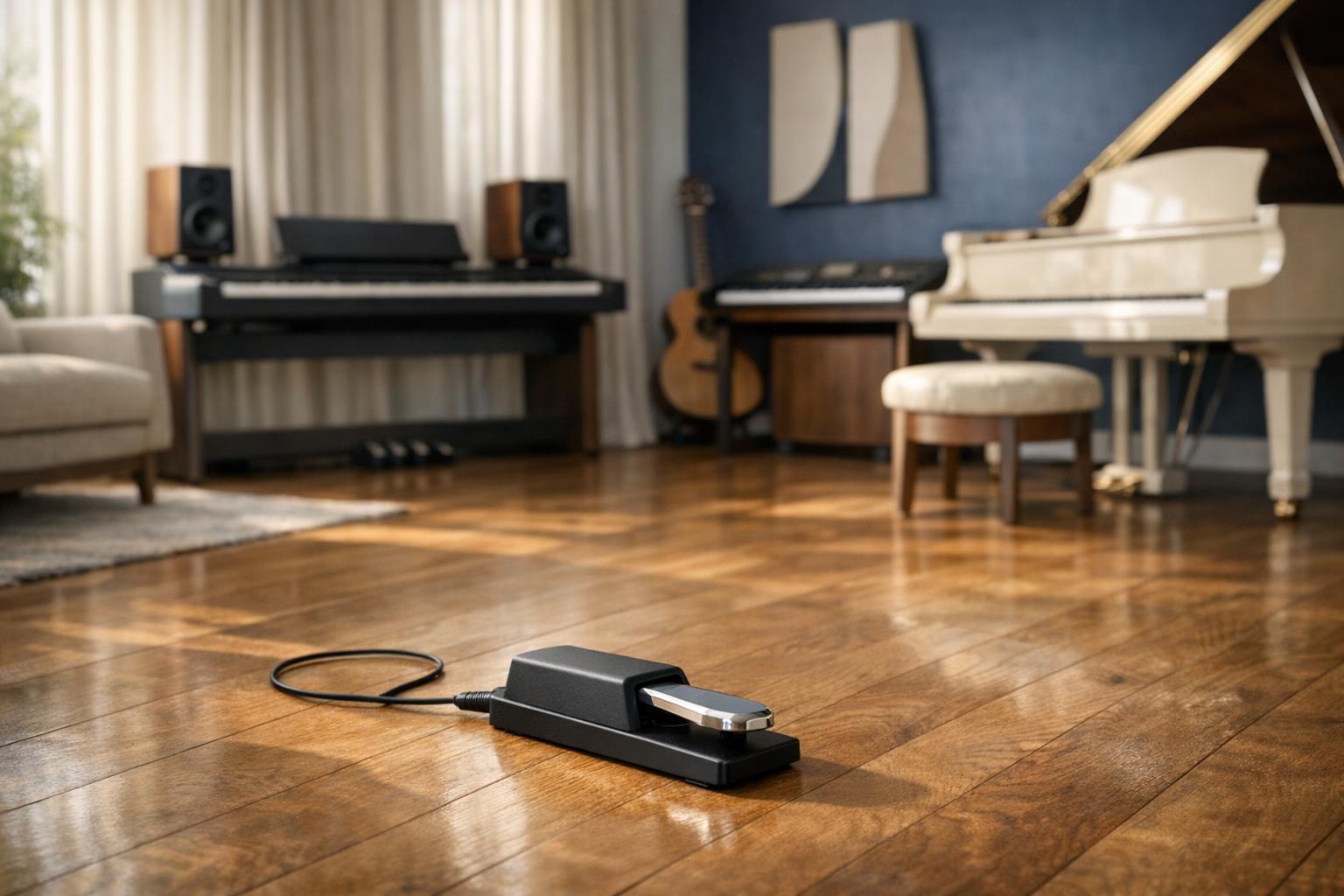
Match function as well as connector
A connector's shape does not establish what information the instrument expects from the pedal. Consult the compatible-accessory list and the section of the manual describing pedal inputs. Check whether the instrument supports a simple on/off action, continuous detection or any assignable function you intend to use. Do not infer half-pedaling support from the physical size of a pedal or from the presence of three pedals in an assembly.
Where the manual discusses polarity or startup behavior, follow its instructions exactly. This guide does not offer a universal wiring or modification procedure because implementations differ. Avoid adapters and rewiring based only on an online photograph. If the manufacturer lists a compatible pedal, that is a stronger starting point than an accessory advertised broadly for keyboards. Compatibility should be verified for both the instrument and the particular function, especially when replacing a supplied pedal with a more complex accessory.
For the next part of this decision, read USB, MIDI and Audio Connections on Digital Pianos. Keep the equipment requirement separate from personal preference, and verify the exact selected model before treating related information as evidence for your own configuration.
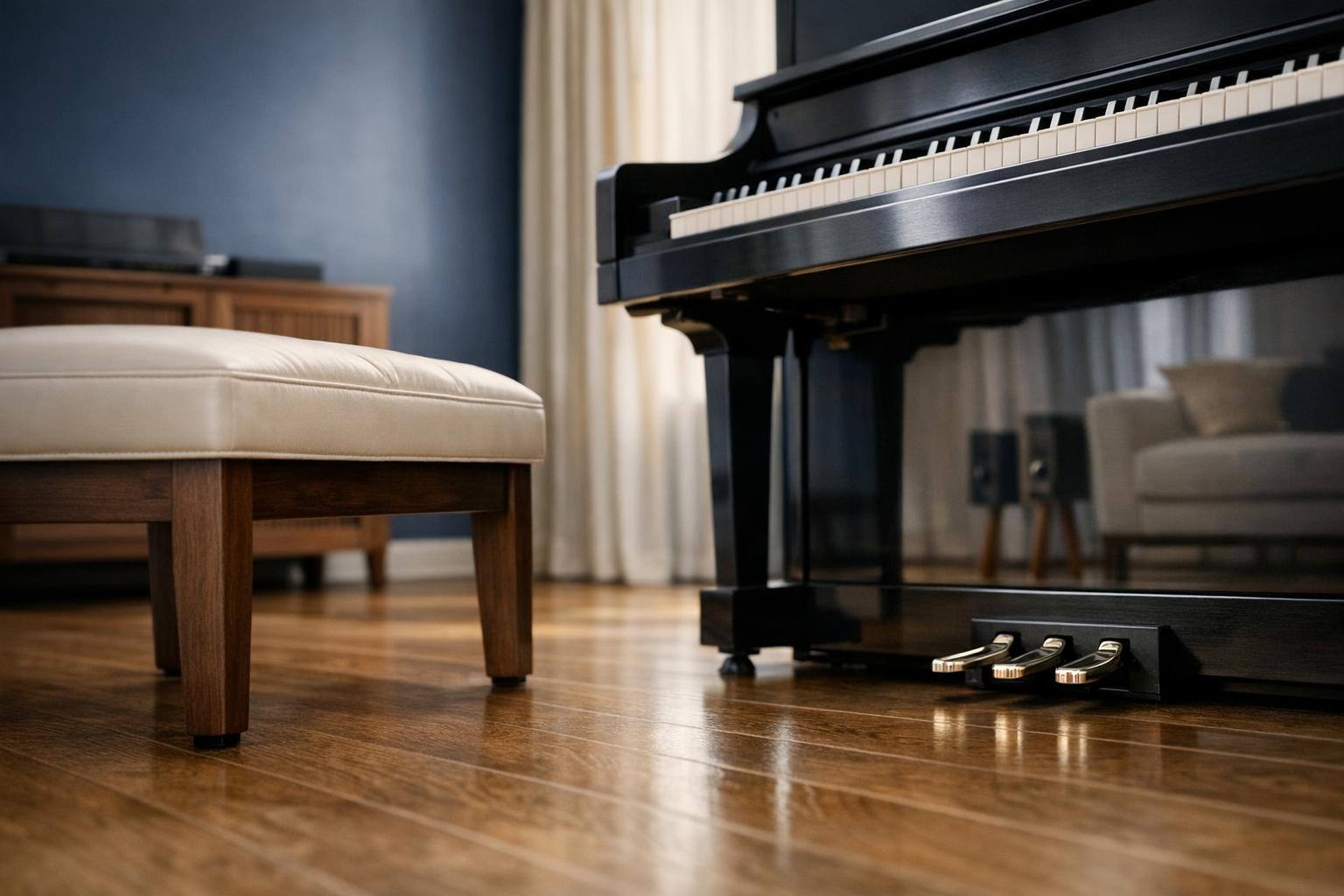
Plan the physical arrangement
Pedal use depends on the surrounding setup as well as the electronics. Check the available floor area, cable route and the position of the bench relative to the keyboard. A furniture-mounted unit is usually part of a defined arrangement; a loose pedal needs a suitable surface and placement consistent with the instrument's instructions. Do not trap cables beneath stand feet or create a walking hazard to reach a distant socket.
If the setup moves frequently, consider how the pedal and its cable will be packed and identified. Keep model-specific accessories together so that another similar-looking pedal is not substituted by mistake. For a shared room, plan where the pedal goes when the instrument is not being used. None of these practical checks establishes that one pedal will improve musical progress. They simply reduce the chance of buying an accessory that cannot be used as intended with the chosen piano and support arrangement.
For the next part of this decision, read Digital Piano Bundles and Accessories: What Is Included?. Keep the equipment requirement separate from personal preference, and verify the exact selected model before treating related information as evidence for your own configuration.
Ask a precise compatibility question
An effective question to the manufacturer includes the complete piano model, the proposed pedal part number and the function you want to use. Asking only whether a pedal works can produce an answer about basic sustain when you actually need continuous control. For a multi-pedal unit, also identify the furniture stand or attachment arrangement. Keep the reply with your purchase notes so that the final decision can be traced to the exact combination rather than a general brand association.
When comparing offers, verify the current seller, contents and return conditions on the selected listing. An inexpensive replacement that lacks the necessary support may not be a useful saving. Our catalog distinguishes complete pianos from accessories, and our instrument ratings do not score an accessory merely because it mentions a highly reviewed piano. Use the listing evidence to verify the package, then use the exact manual to settle compatibility. If either source leaves a conflict unresolved, postpone the accessory choice rather than inventing certainty.