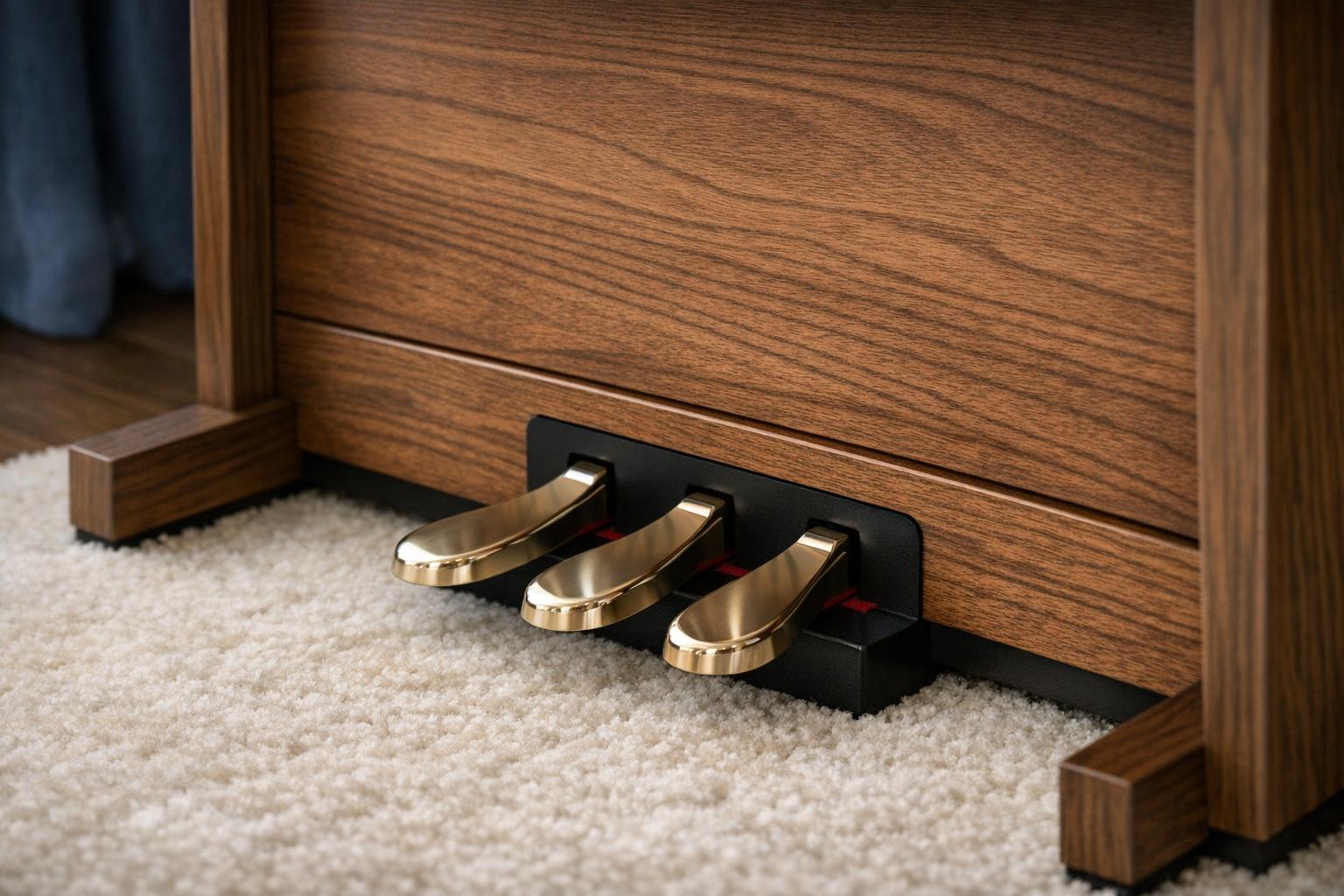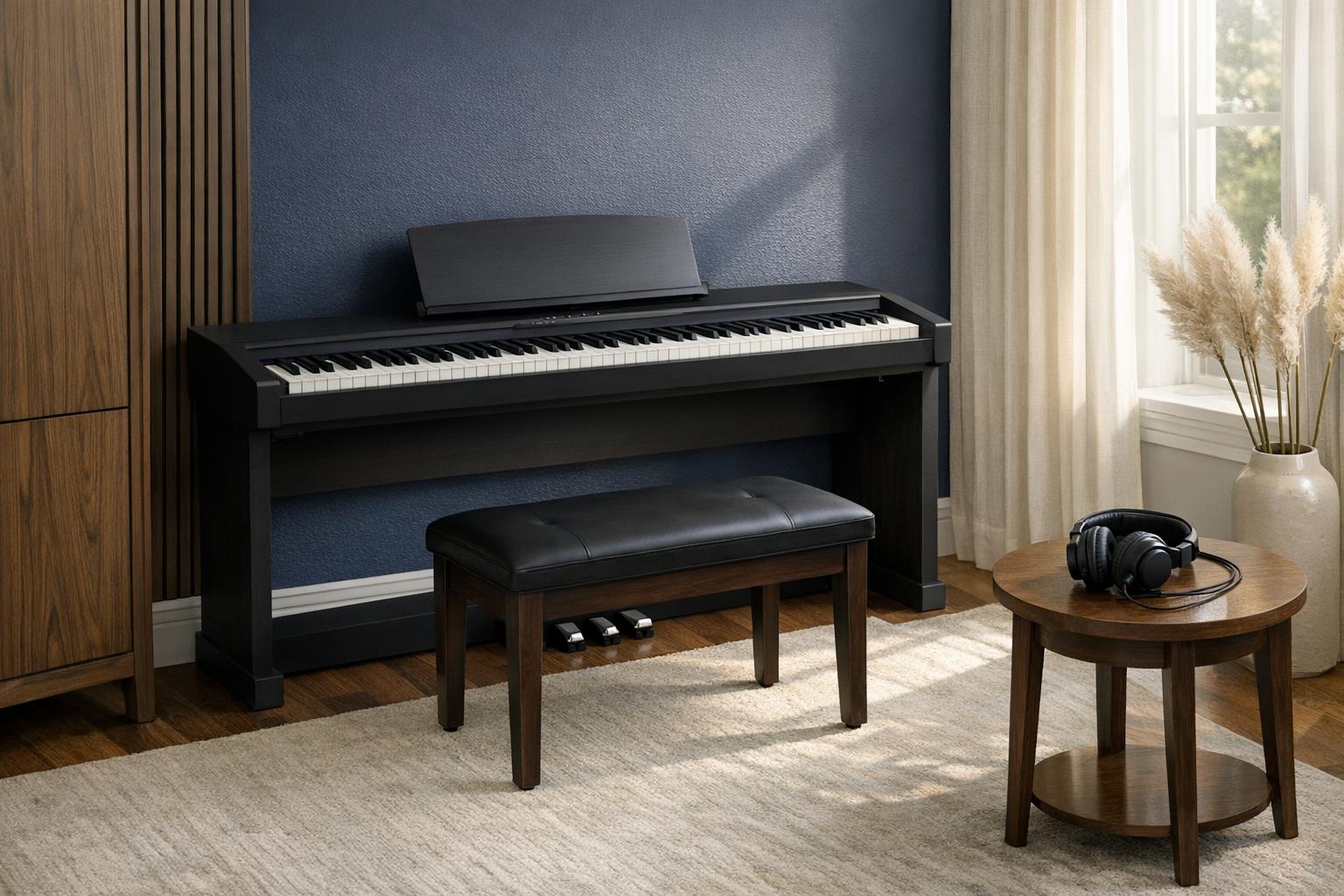
A piano bundle can simplify a purchase, but only when the included items are identified clearly and match the instrument. A stand, bench, pedal, headphones and carrying case can all appear in a title or photograph without enough detail to judge their suitability. Compare the whole arrangement instead of counting accessories as if every item had equal value. This guide explains how to separate complete instruments from accessory-only listings and how to verify the contents of a bundle without inventing compatibility or assuming a discount.
Identify the main item before comparing prices
Read the title's main noun phrase. A piano keyboard stand that fits 54-88-key instruments is not an 88-key piano. A stand-and-bench set remains an accessory package even if a digital piano appears in a lifestyle image. Our catalog retains relevant accessories in their own category, while complete-instrument comparisons require evidence for the instrument itself. This rule prevents a cheap accessory from appearing to be an unusually inexpensive complete piano.
For a genuine instrument bundle, identify the keyboard model and the seller's exact configuration. A brand name alone is not enough. Keep the ASIN and selected option in your notes, particularly when an Amazon page offers multiple packages. A similar-looking bundle may include a different stand, a basic sustain switch instead of a multi-pedal assembly, or no bench at all. Do not transfer a feature or accessory list from one option to another merely because the main keyboard model appears unchanged.
For the next part of this decision, read Caring for and Moving a Digital Piano. Keep the equipment requirement separate from personal preference, and verify the exact selected model before treating related information as evidence for your own configuration.
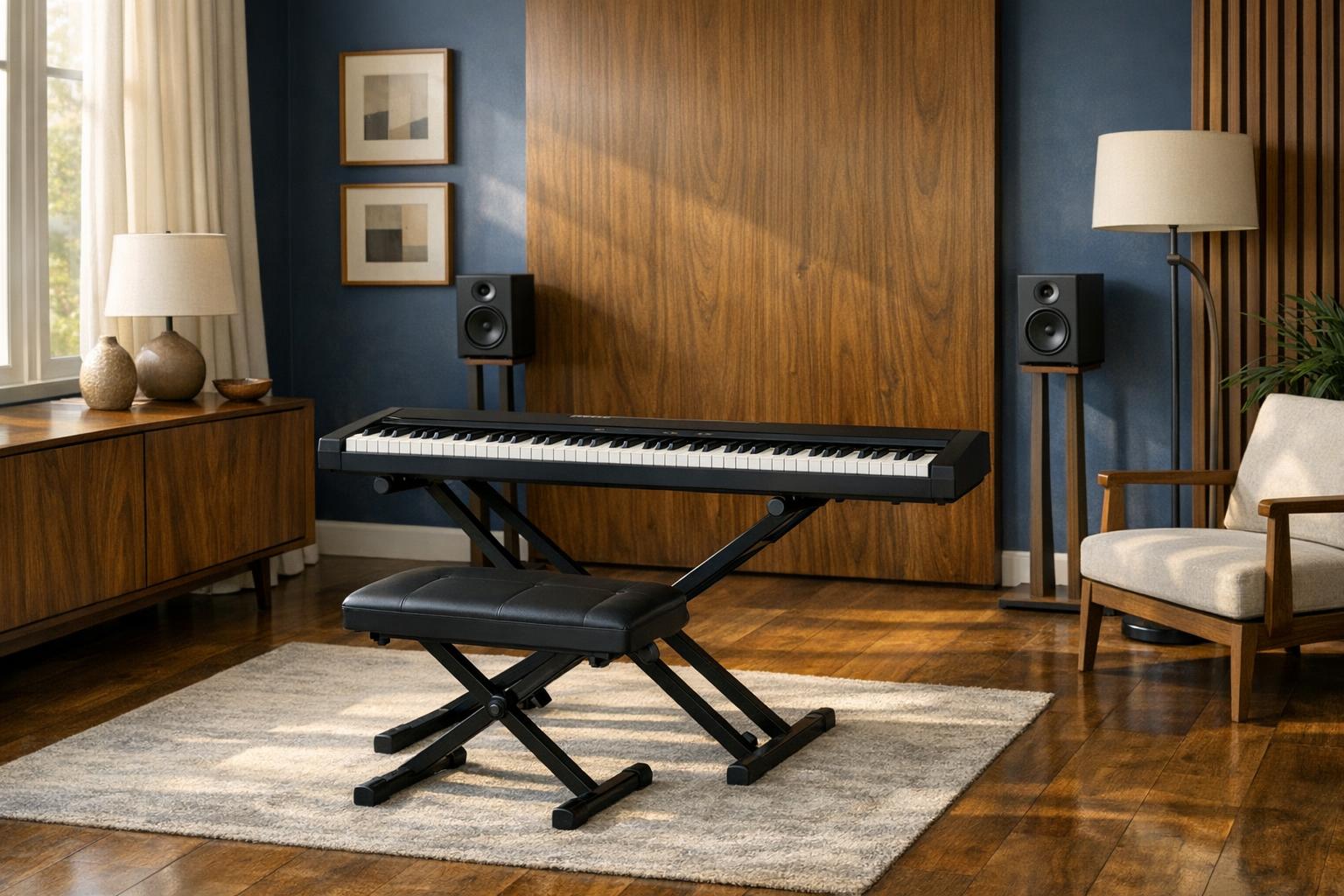
Make an itemized contents list
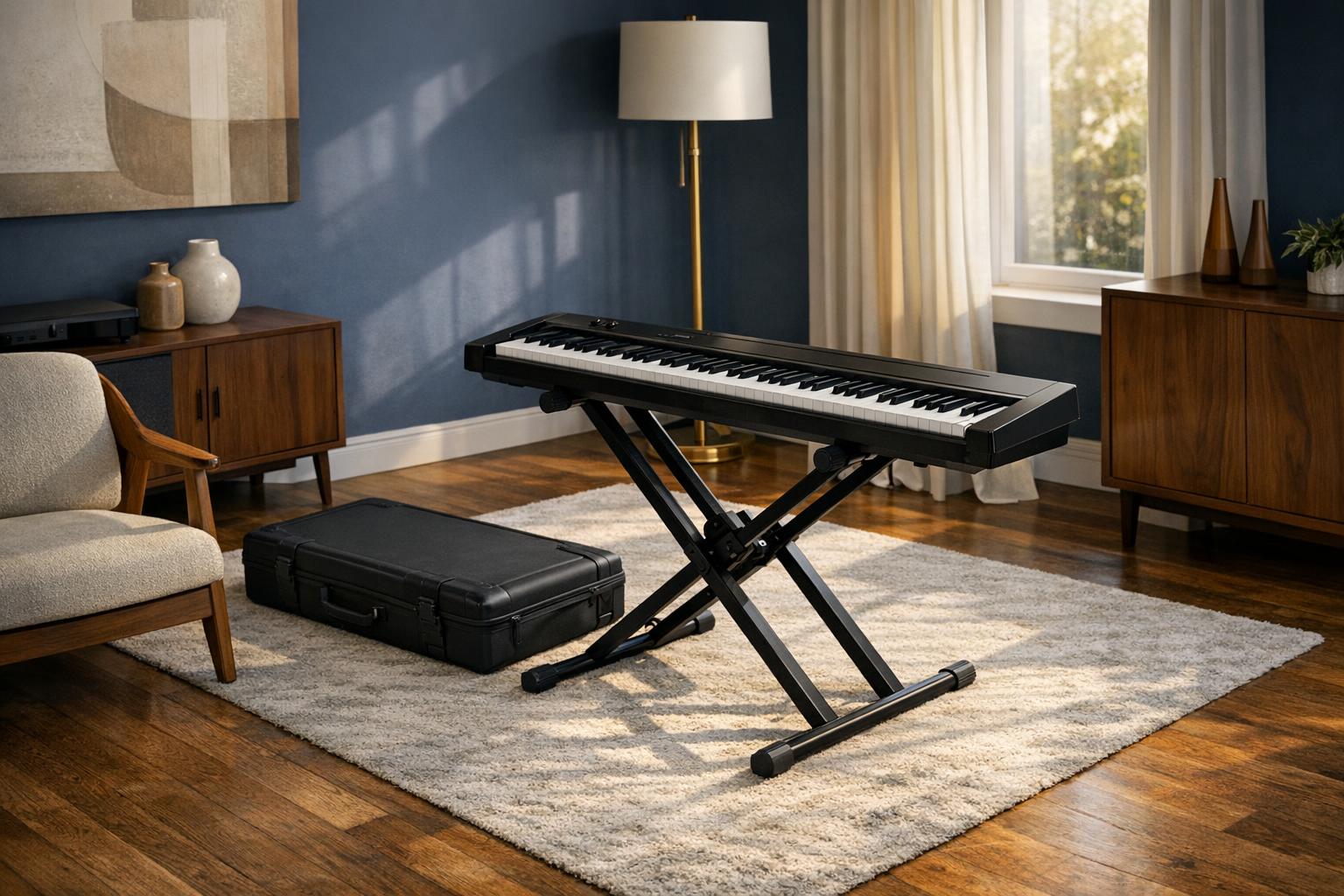
Write one line for each included component and record any stated part number. Separate manufacturer-supplied accessories from additions made by the retailer. If headphones are included without a model, mark them as unspecified rather than assigning a quality level. If a carrying case is pictured, confirm whether it is actually part of the offer and whether it is designed for the keyboard dimensions and intended transport. Product images can contain props that are not sold with the instrument.
Use the same checklist for every offer: instrument, adapter, music rest, pedal, support, bench, headphones, cables and any digital extras. An online lesson subscription or software offer has its own activation and compatibility conditions, so check the current terms rather than assuming permanent access. This site does not promise learning outcomes from bundled lessons or apps. The useful question is what entitlement the seller actually provides and whether you want it, not whether the package uses educational language in its title.
For the next part of this decision, read Weighted and Semi-Weighted Piano Keys Explained. Keep the equipment requirement separate from personal preference, and verify the exact selected model before treating related information as evidence for your own configuration.
Verify compatibility and usable value
A stand needs to support the exact keyboard's dimensions and weight according to the relevant manufacturer guidance. A pedal needs the correct connection and supported function. A bench needs its own assembly and use instructions. An accessory appearing in a bundle is evidence of the seller's contents statement, not an independent test that every component is ideal for your needs. Ask for clarification when the package mixes model-specific and generic parts.
Price comparison should use a complete, usable arrangement. If you already own a suitable bench and headphones, counting new ones as an automatic benefit can distort the decision. Conversely, a bare instrument may require additional purchases before it suits the room. We do not award a best-value badge without an appropriate verified price basis, and we do not turn a listed saving into a claim about the bundle's quality. Check the current seller, shipping terms and return conditions together with the current offer.
For the next part of this decision, read Digital Piano Pedals: Compatibility Before Features. Keep the equipment requirement separate from personal preference, and verify the exact selected model before treating related information as evidence for your own configuration.
Check the delivery and return implications
A bundle can arrive in more than one carton, and the seller's terms may distinguish the instrument from added accessories. Confirm the delivery format and what to do if a component is missing or damaged. Retain the contents list and packaging information while checking the order. Follow the manuals for assembly and connections rather than treating a marketing photograph as an instruction sheet. We do not provide model-specific assembly or lifting directions.
Before finalizing the purchase, revisit the exact selected listing and compare it with your saved checklist. Make sure the option has not changed and that all essential components are still named. A bundle should resolve practical needs, not introduce unknowns hidden behind a long title. If an important accessory is unspecified, buying the instrument and a separately verified component may be worth considering, but that is a configuration decision rather than a universal rule. The final choice should rest on identified equipment, compatible functions and current terms.