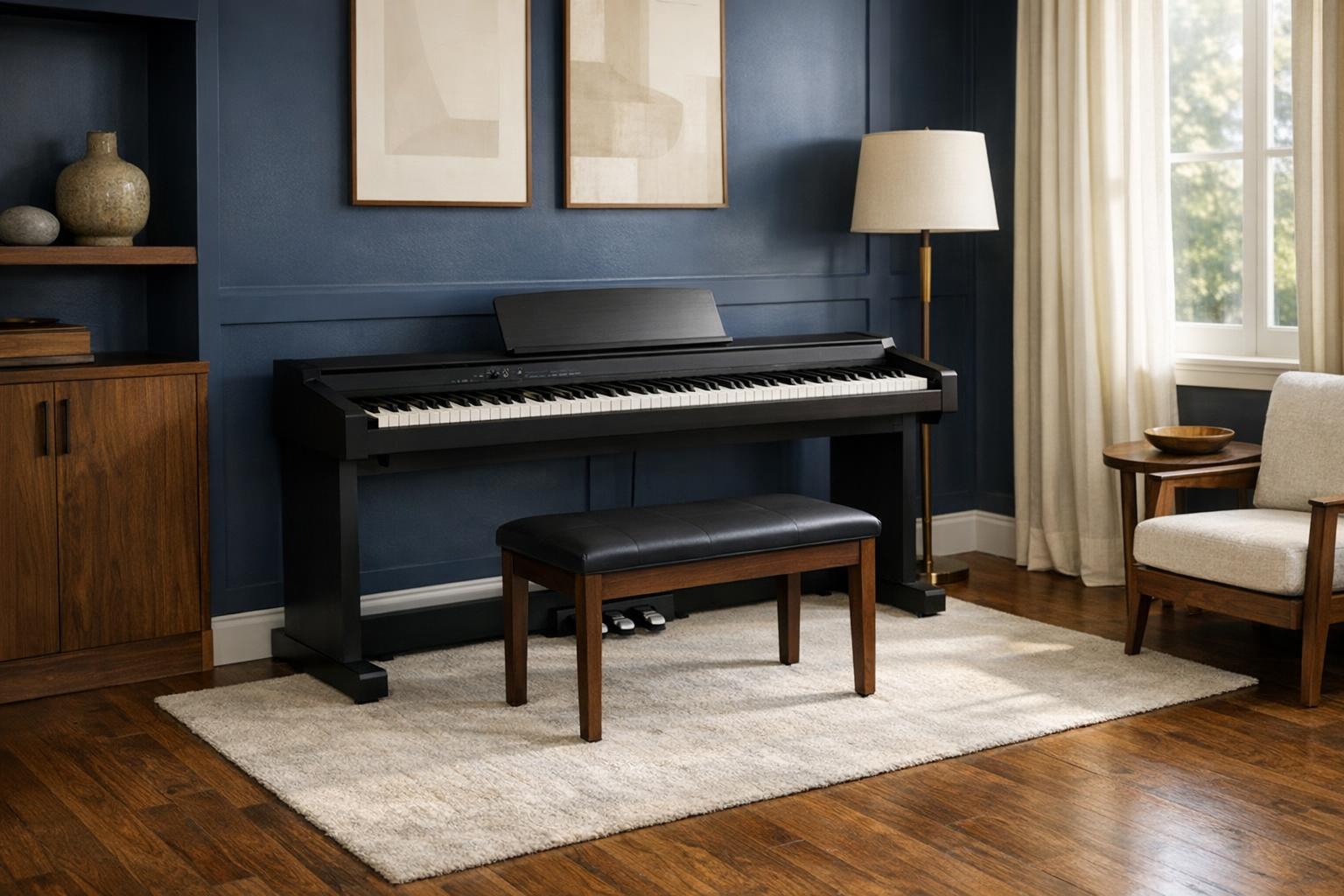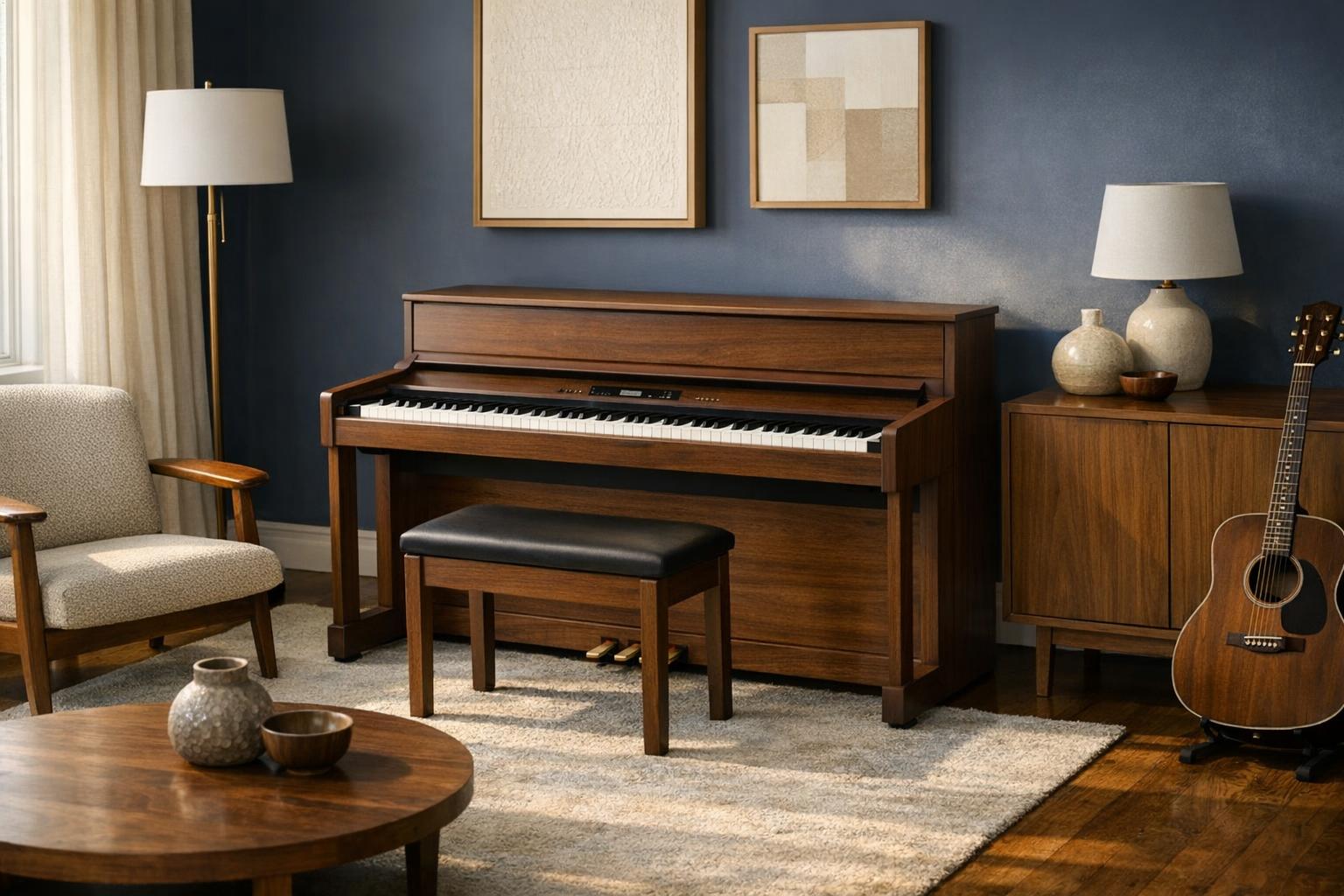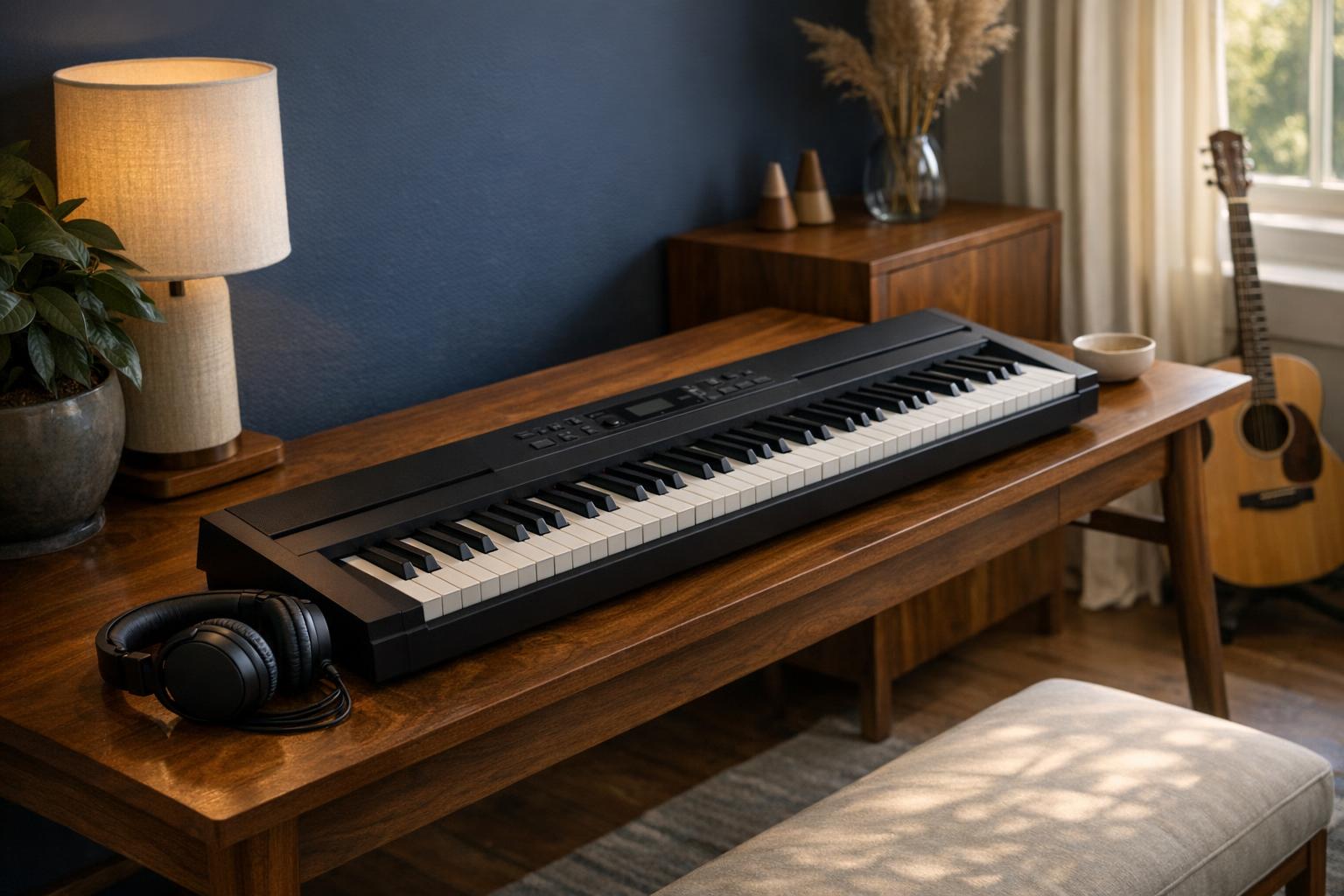
Care and moving requirements depend on the exact instrument, its cabinet and the accessories attached to it. A portable-format piano is not necessarily a one-person lift, and a console cabinet should not be handled as if it were a loose keyboard. Start with the manufacturer's manual, use the permitted cleaning method and plan movement before disconnecting anything. This guide is a preparation checklist rather than a substitute for model-specific instructions, repair advice or a promise that a particular storage arrangement will protect every instrument.
Use the manual's care instructions
Find the cleaning and environmental guidance for the exact model. Materials, finishes and control surfaces can require different treatment. Do not apply a household cleaner, polish or solvent based on advice for another piano or a piece of furniture that looks similar. Follow the manufacturer's instructions about cloths, moisture and prohibited products. If the manual does not answer a specific question, ask the manufacturer rather than experimenting on the instrument's finish or key surfaces.
Keep liquids and cleaning supplies away from the keyboard and connections while planning the task. A dust cover can be useful only if it is suitable for the instrument and used consistently with its ventilation and storage guidance. Confirm the cover dimensions, including any music rest or other projection you intend to leave in place. A listing that says universal does not guarantee a good fit for every configuration. We do not claim that a particular accessory extends service life or prevents a specific failure without appropriate evidence.
For the next part of this decision, read Choosing an 88-Key Digital Piano. Keep the equipment requirement separate from personal preference, and verify the exact selected model before treating related information as evidence for your own configuration.
Plan the destination before moving anything
Measure the new location and the route to it. Check the assembled dimensions, carton information where relevant, and the manufacturer's handling guidance. Identify doors, turns and obstacles in advance. A move across the room still requires attention to the stand, pedal cables and attached accessories; a move between buildings adds packaging and transport questions. Do not use the instrument's portable category as evidence that it can be lifted safely by one person.
For a console or furniture-stand arrangement, determine whether the manual specifies any disassembly and who should carry it out. This guide intentionally does not provide universal lifting points, screw sequences or loading instructions. Those details can differ by model and an incorrect instruction can damage equipment or injure someone. Arrange suitable assistance or professional handling when the weight, access or complexity requires it. A careful plan should resolve these questions before the instrument is unsupported or blocking the room.
For the next part of this decision, read Console or Portable Digital Piano: Choosing a Format. Keep the equipment requirement separate from personal preference, and verify the exact selected model before treating related information as evidence for your own configuration.

Keep accessories and connections organized
Before a permitted move, identify each cable and accessory using your model documentation. Preserve original adapters and model-specific pedal units with the instrument so they are not confused with similar-looking equipment. Follow the manual's shutdown and disconnection instructions. Do not pull on cables, improvise replacement power arrangements or assume that another adapter from the same brand is equivalent. Electrical compatibility must come from the specified ratings and approved accessory information, not visual resemblance.
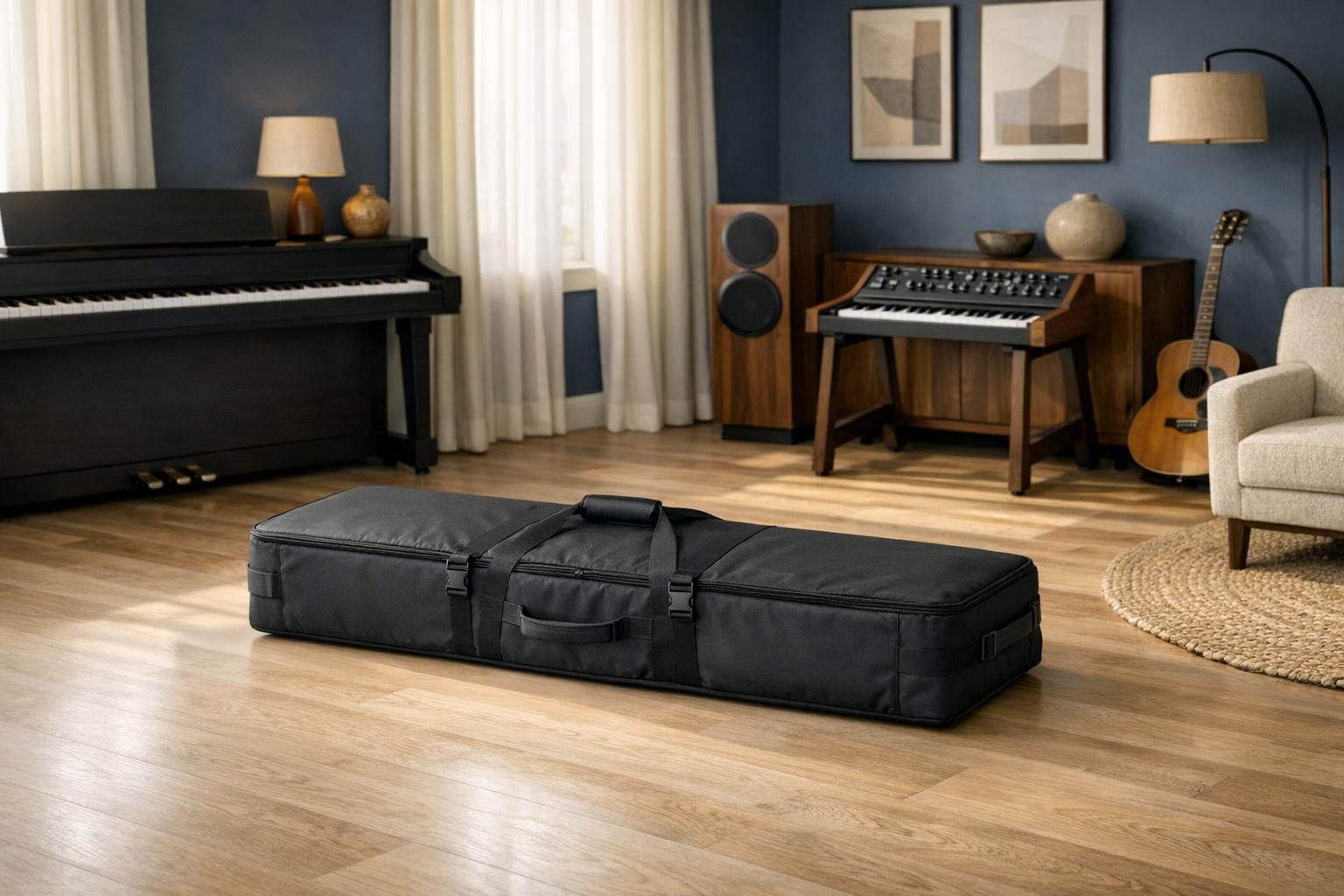
Protect detachable accessories as directed and keep small hardware organized if the authorized procedure involves it. A carrying bag is not automatically a protective shipping case, and a fitted case may still have handling limits. Confirm the intended use with the case and instrument documentation. Keep the contents list with the equipment so that a missing pedal or adapter is noticed before the next setup. Our catalog can identify the exact listing, but it cannot verify how a particular instrument has been packed or transported.
For the next part of this decision, read Digital Piano Headphones and Quiet-Use Planning. Keep the equipment requirement separate from personal preference, and verify the exact selected model before treating related information as evidence for your own configuration.
Recheck the complete arrangement afterward
At the destination, follow the manufacturer's setup instructions and check that the support, pedals and cables are arranged as intended. Revisit the room measurements if a different bench or stand is being used. Avoid cable strain and walking hazards, and do not place the instrument in conditions that contradict its environmental guidance. If you notice damage, unusual behavior or uncertainty about an electrical component, stop using the affected equipment and contact the appropriate support channel rather than attempting an unsupported repair.
Keep the manual, purchase details and model identity available for service questions. A general comparison score does not predict the condition of an individual instrument or the outcome of a move. Similarly, an accessory advertised for a series may not suit every cabinet or keyboard within it. Care decisions should therefore stay tied to the exact equipment and current manufacturer guidance. The useful role of a planning guide is to make those checks visible, not to replace them with reassuring claims that have not been tested.