Yamaha P45 vs P71 (and P145): Which One Should You Buy?
Yamaha P45 or P71? Same 88 weighted keys and 10 voices, different box contents and ratings, and when the newer P145BT is worth the extra money.

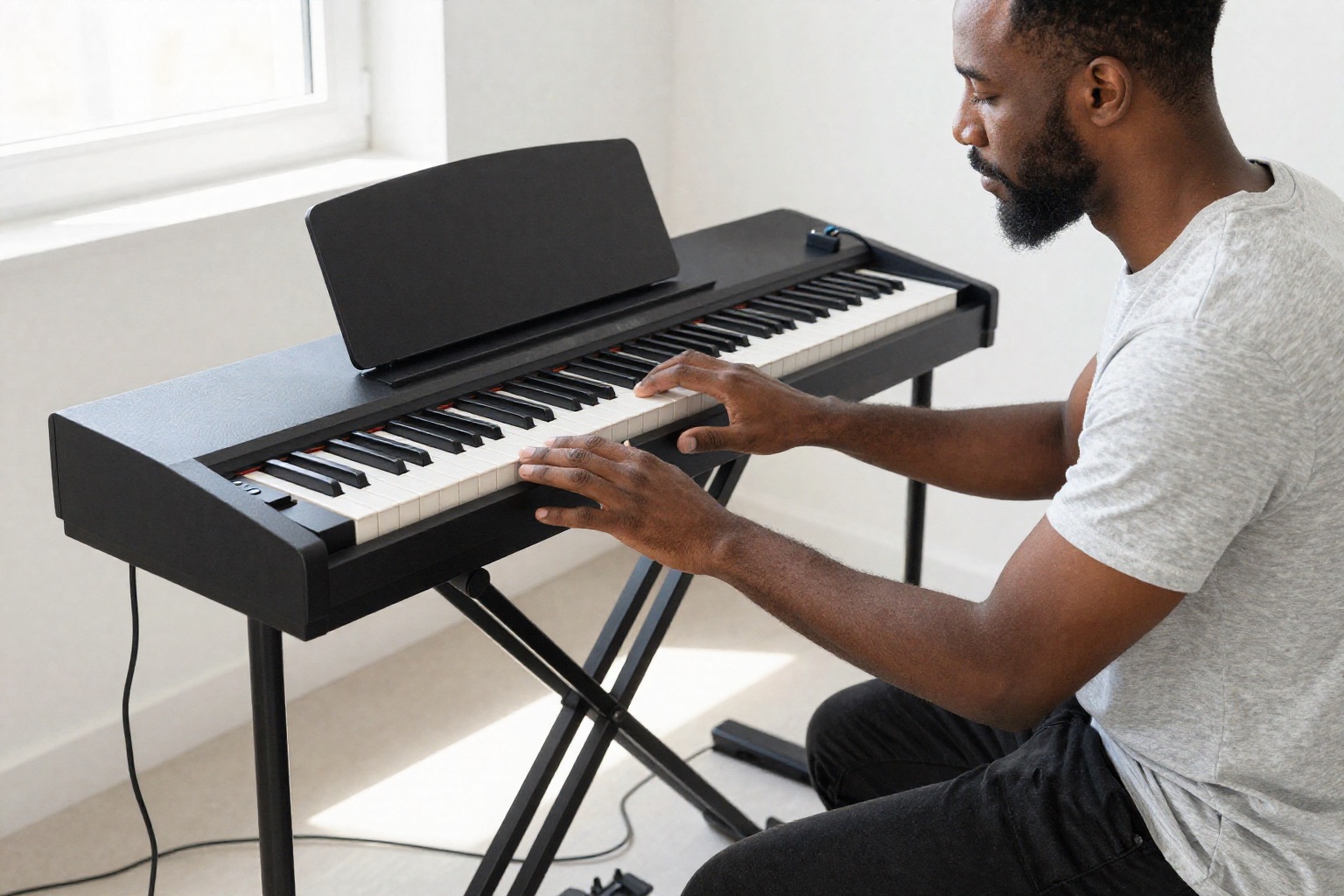
Shop for a first Yamaha piano and you hit the same wall everyone hits: the P45 and the P71 look identical, cost the same and sit next to each other in every search. Then the newer P145 shows up for a little more. We went through the three listings line by line, so you can close the tabs and order the one that fits your home.
Affiliate disclosureAs an Amazon Associate we earn from qualifying purchases made through links on this page. Commissions never change our ratings.
The short answer
Short answer Get the P71 or the P45, whichever is cheaper the day you order: on paper they are the same piano. Pay extra for the P145BT only if Bluetooth audio and app practice matter to you.
If you want one name, it's the Yamaha P71. It's rated 9.2/10 and holds #1 in our portable digital piano ranking, just ahead of the P45 at 8.8/10. That gap has nothing to do with the keys. Both listings state 88 weighted, touch-sensitive keys and 10 voices, and both carry a 4.7/5 buyer rating. The P71 simply has far more owners behind it: 6,654 reviews against 1,752. Review volume is a big part of how we rate, because more owners means fewer surprises after delivery.
The P145BT is the newer, slim-bodied option, rated 7.6/10. It sits lower mainly for one reason: only 132 buyers have reviewed it so far. Its listing actually promises more than the other two, which is exactly why it deserves a proper look before you decide.
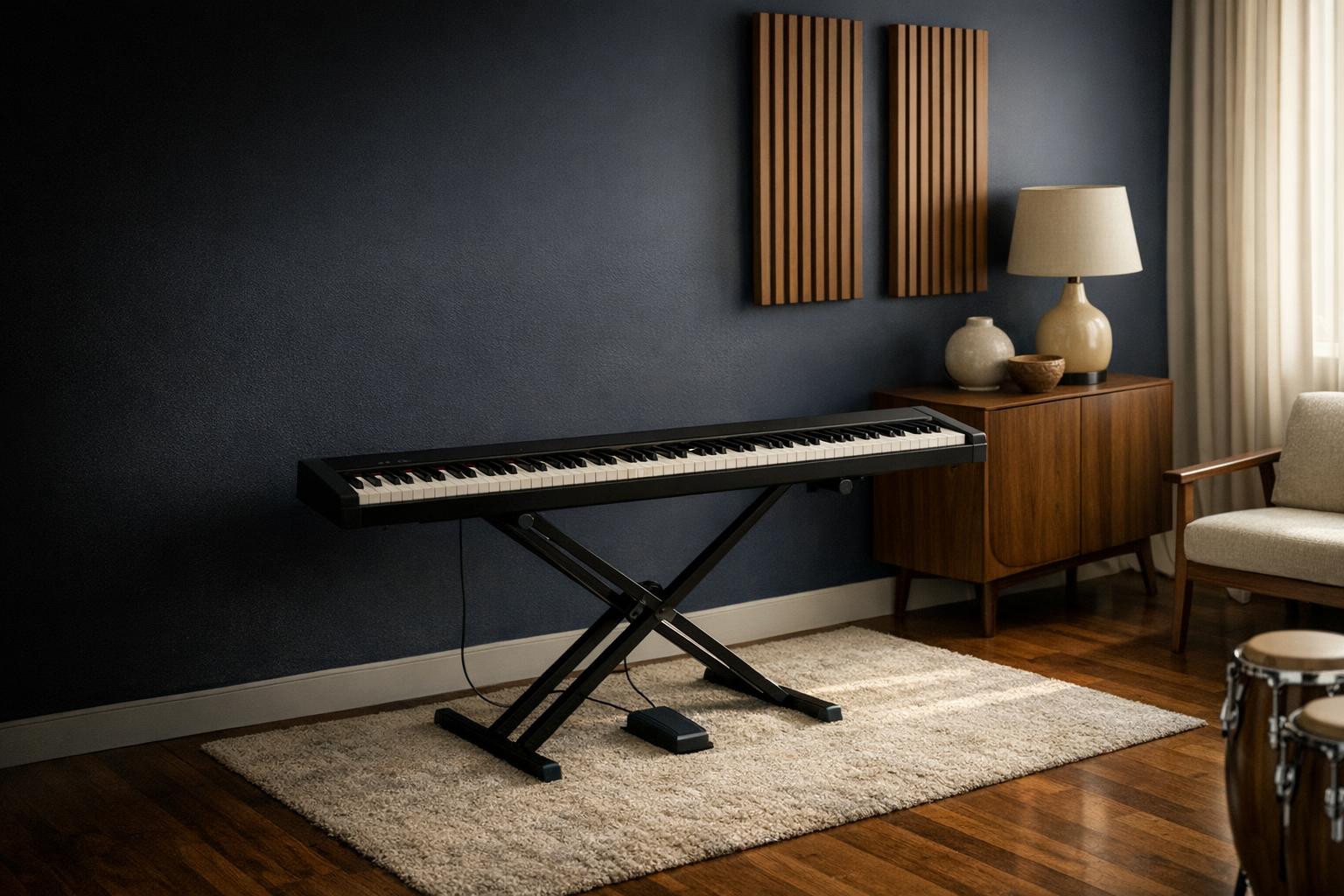
P71 vs P45: what the two listings actually say
Put the two listings side by side and you'd struggle to tell them apart. Same 88 weighted keys described as replicating an acoustic piano, same 10 voices led by a Yamaha grand piano sound, same simple one-button control, a sustain unit in the box. The two listings even open on the same product photo. And on Oct 30, 2026 they cost exactly the same, $449.99.
The differences are small, but worth knowing before you click. The P71's title calls it an exclusive edition and names the power supply, and its listing mentions Dual mode, for layering two voices such as piano and strings. The P45's listing names a music rest, built-in speakers and USB connectivity, and says it is made for beginners.
That last line is why the P45 shows up in our digital pianos for beginners ranking and the P71 doesn't: that ranking only takes pianos whose listing states a learning aid, and the P71's doesn't mention one. Does that make the P45 the better piano for a learner? Not really. The keys your teacher cares about are the same weighted 88 on both. It just makes the P45 the more fully described listing.
One practical point: only the P45 listing mentions USB. If you plan to run a learning app or notation software over a cable, that's the listing that puts it in writing. Planning the same with a P71? Look up its manual first.
| P71 | P45 | P145BT | |
|---|---|---|---|
| Our rating | 9.2/10 | 8.8/10 | 7.6/10 |
| Buyer reviews | 6,654 · 4.7/5 | 1,752 · 4.7/5 | 132 · 4.6/5 |
| Price (may have changed) | $449.99 on Oct 30, 2026 | $449.99 on Oct 30, 2026 | $529.99 on Sep 30, 2026 |
| Keys | 88, weighted, touch-sensitive | 88, weighted, touch-sensitive | 88, weighted, Graded Hammer Compact action |
| Voices | 10, plus Dual mode | 10 | Grand piano sound (no voice count stated) |
| Connections stated | Not named in the listing | USB | Bluetooth audio, Smart Pianist and Rec'n'Share apps |
| In the box, per the listing | Sustain pedal, power supply | Music rest, sustain foot switch | Music rest, sustain foot switch, AC adapter |
What comes in the box, and what doesn't
This is where most first-time buyers get caught out. None of these three is a piano you unpack and play on the floor. Here is what each listing says you get:
- P71: a sustain pedal and the power supply.
- P45: a music rest and a sustain foot switch.
- P145BT: a music rest, a sustain foot switch and the AC adapter.
Notice the gaps. The P71 listing doesn't name a music rest; the P45 listing doesn't name the power supply. If either one matters to you, read the box contents on the exact listing before you order, especially when a third-party seller ships it.
None of the three lists a stand or a bench, so plan for both, and for headphones if you'll practise after the kids are in bed. The included sustain unit is fine to start lessons with; if you later want a heavier, piano-style pedal, our guide to digital piano pedals explains what plugs in where. Headphone questions are covered in practising quietly with headphones.
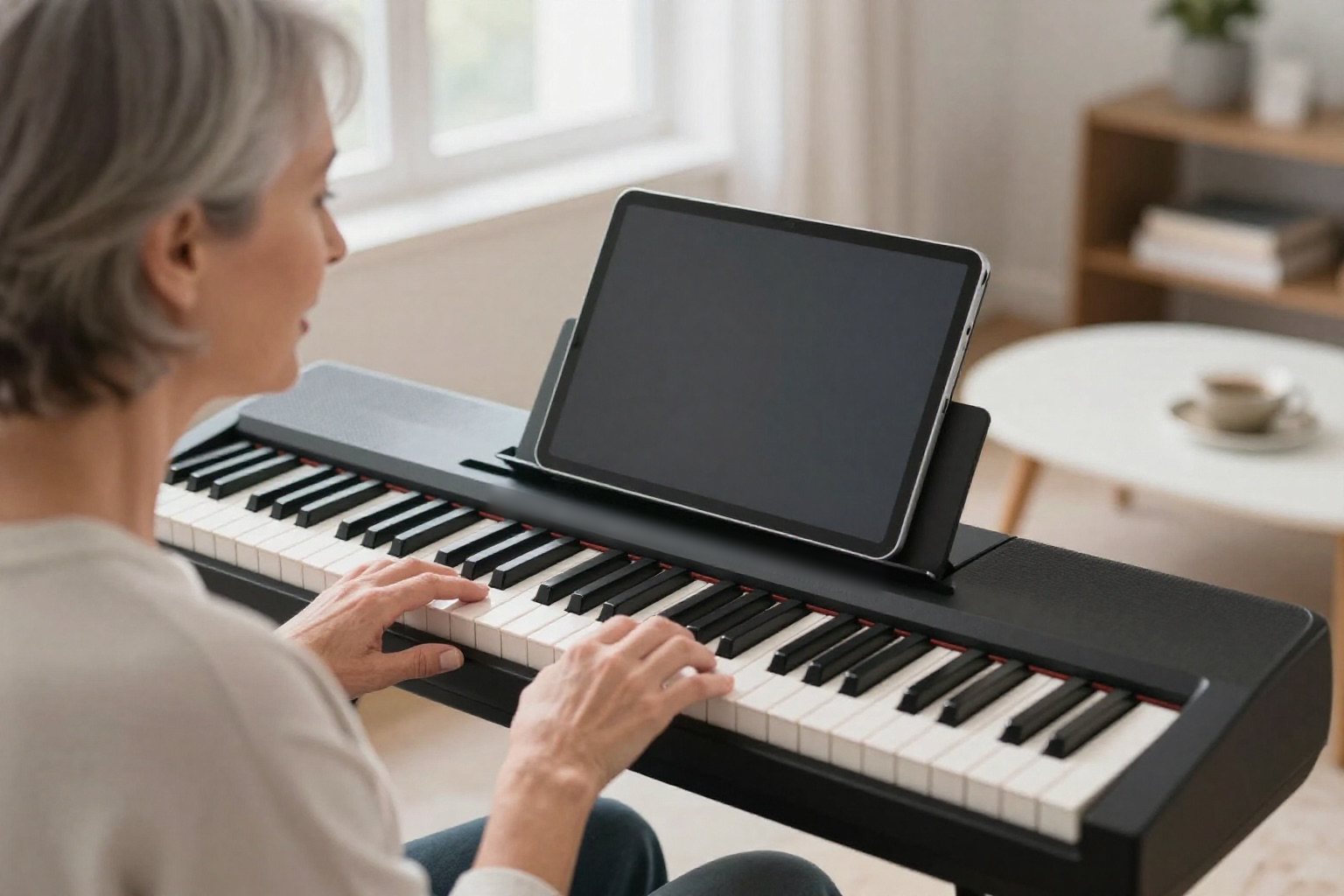
The P145BT: what the extra $80 buys
The P145BT was $529.99 on Sep 30, 2026, against $449.99 for the P71 on Oct 30, 2026. Prices move, so treat that $80 gap as a rough guide. On its listing, the extra money buys three things.
First, the keyboard is named: Graded Hammer Compact action, where the P71 and P45 listings only say weighted. Second, Bluetooth audio, so you can stream a song from your phone and play along through the piano's own speakers. Third, the listing points to two Yamaha apps, Smart Pianist and Rec'n'Share, that help you play, practise and share what you play. The listing also describes a slim, lightweight body made to fit any room.
Who is that worth it for? Anyone whose practice already runs through a phone: you learn songs by ear, follow backing tracks, or send recordings to a teacher between lessons. For that person, the P145BT is the nicer piano to live with. If you just want weighted keys and a good piano sound for lessons, the P71 does that for less, with a much longer review history behind it.
One thing to keep straight: the listing describes Bluetooth audio coming into the piano. Don't assume it sends the piano's sound out to wireless headphones. Our USB, MIDI and audio guide explains the difference in plain words.
Stand, bench and the real price of the setup
The price on the piano is only part of the bill. A P71 or P45 still needs something to stand on and something to sit on. Take the best-rated stand in our accessories, the GLEAM Double X stand at $32.99, and a simple X-style bench such as the GLEAM X-style bench at $24.99, both recorded on Sep 30, 2026. Add them to the P71 and the starter kit comes to about $507.97, before headphones. All of those prices may have changed since.
That's why, if the piano will live in one room and never travel, we'd also look at the STRICH SDP-300W. It's rated 8.1/10, its listing states 88 hammer-action weighted keys and a furniture stand, and it was $349.99 on Sep 30, 2026. It's a different kind of instrument, a home piano with its own stand rather than a keyboard you can carry to a lesson. For a beginner who will never move it, that's a fair trade, and it's in our console ranking for a reason.
So which one is yours?
- First piano, lessons ahead, careful budget: the P71 or the P45, whichever is cheaper when you order. Same price? Take the P71 for its bigger review record.
- You want USB stated in the listing, for an app or a computer: the P45.
- You learn from your phone, play along with songs or record yourself: the P145BT.
- The piano stays in one room and you'd like three pedals on a console body: look at the Donner DEP-20, our 9.4/10 pick in the beginner ranking.
Whatever you choose, the keys come first, because the action is the one part you can't upgrade later. Our guide to weighted and semi-weighted keys explains why we never count a semi-weighted keyboard as weighted. To see how these Yamahas stack up against Roland, Casio and Donner, the portable ranking has the full top 5, and the best digital pianos ranking covers every format.
Our rated picks
The three best-rated models of our best portable digital pianos ranking, from buyer reviews and the listed specs.


Product images: Amazon listings
Frequently asked questions
Is the Yamaha P71 the same piano as the P45?
On paper, nearly. Both listings state 88 weighted, touch-sensitive keys, 10 voices and one-button control, and both were $449.99 on Oct 30, 2026 (prices may have changed). The P71 listing adds Dual mode and names the power supply; the P45 listing adds a music rest, built-in speakers and USB.
Does the Yamaha P71 come with a stand?
No stand is named in its listing: you get a sustain pedal and the power supply. Plan for a stand and a bench. A double-X stand is the cheapest way to start, and an X-style bench goes well with it.
Why does the P71 rate higher than the P45 if they are so alike?
Review volume. Both have a 4.7/5 buyer rating, but the P71 has 6,654 reviews and the P45 1,752. A long review record counts for a lot in our rating, which is why the P71 ends up at 9.2/10 and the P45 at 8.8/10.
Is the P145BT worth the extra money over the P45?
If you will use Bluetooth audio or the Smart Pianist and Rec'n'Share apps, yes, and its listing also names the Graded Hammer Compact action. For lessons alone, the P71 or P45 gives you weighted 88 keys for less.
Which one is better for a complete beginner?
Any of the three will carry you through the first years of lessons. The P45 is the one in our beginner ranking, because its listing says it is made for beginners. If you'd rather have three pedals on a console body, the Donner DEP-20 leads that ranking at 9.4/10.
Sources and further reading
- Yamaha P71 (exact listing), read our review
- Yamaha P45 (exact listing), read our review
- Yamaha P145BT (exact listing), read our review
- Yamaha manual library: choose the exact model before you rely on a spec (manufacturer documentation)
- Yamaha P-series portable pianos: action, connections and apps per model (manufacturer documentation)